How to Start a 3D Printing Business: 8 Steps With Real Data
How to start a 3D printing business: pick a niche, get the right licenses, price with real costs, plan for Etsy fees, take better photos and scale up.
2026-11-16 · 6 min read · digcy.co
To start a 3D printing business, pick one niche with proven demand, only sell designs you have a commercial license for, price from your real costs plus Etsy fees, and grow by adding printers once one product sells steadily. You do not need a big budget. Several Etsy shops in our data started in 2023 and already have tens of thousands of public sales.
Interest is growing fast. In Google Trends (US), the yearly average for "things to 3d print" rose from 18 in 2021 to 40 in 2026, and "makerworld" went from 0 to 54. Here is how to turn that interest into a 3D printing business, step by step.
The 8 steps at a glance
- Pick a niche, not a printer
- Get the right licenses
- Know your costs per item
- Set prices that cover everything
- Plan for Etsy fees
- Take photos that sell
- Launch before the season
- Scale with a print farm
Step 1: Pick a niche for your 3D printing business
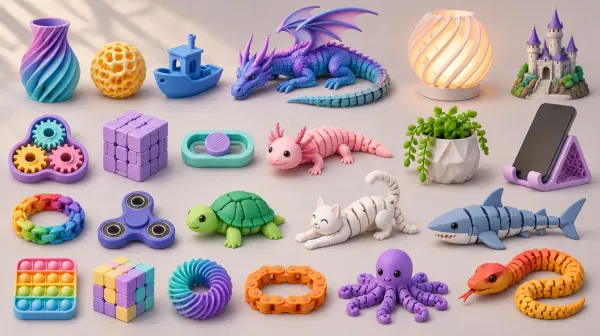
The shops that win sell to a clear buyer, not "anything you want printed." Look at these real Etsy shops, with public sales counts checked Nov 16, 2026:
| Shop | Niche | Etsy sales | On Etsy since |
|---|---|---|---|
| NextLevel3Duk | Personalized name keychains | 35,697 | 2023 |
| Crafts3Dcom | Advent calendars, mystery packs, dragons | 25,110 | 2023 |
| PrintLevel3D | Themed planters and vases | 21,324 | 2021 |
| Olee3DArt | Gear-ball fidgets and lamps | 21,173 | 2023 |
| MadeByMorelandKC | 3D-printed pendant lights | 13,883 | 2023 |
| 3DeanPrints | Custom family crossword tiles | 5,668 | 2021 |
Each one does one thing well. To find your niche, browse our ideas page, check what is moving on the trending page, and read 3D prints that sell, which compares Etsy prices with MakerWorld demand. Good niches have a buyer who pays for something personal, themed or hard to find in stores.
Step 2: Get the right licenses
This step can end a business before it starts. A free model on MakerWorld or Printables does not give you the right to sell prints of it. Each model has a license, and many popular ones are personal use only.
- Read the license on every model you plan to sell.
- Buy a commercial license from the designer when one is offered. Many designers sell them, and miniature sculptors often sell "merchant" tiers.
- Avoid movie, game and brand logos and characters, even on free models.
- The safest long-term plan is your own designs. The original Gridfinity standard, for example, is MIT-licensed, so you can design your own bins.
Designing has another upside. Cinderwing3D has 55,767 sales of dragon STL files, selling designs instead of prints.
Also check your state's rules for registering a business and collecting sales tax. Rules vary, so look them up for where you live.
Step 3: Know your costs per item
Every print has three main costs: filament, machine time, and your time. Here is what our idea data shows per unit for a few common products, next to the Etsy median price on the first results page (checked Nov 16, 2026):
| Product | Filament per unit | Machine time | Etsy median |
|---|---|---|---|
| Keychains | 6 g | 0.4 h | $4.14 |
| Flexi animals | 20 g | 1 h | $10.49 |
| Phone stands | 25 g | 1 h | $20.07 |
| Deck boxes | 50 g | 2.5 h | $43.75 |
| Lithophanes | 40 g | 4 h | $36.69 |
| Lamps | 150 g | 6 h | $55.11 |
| Dice towers | 180 g | 8 h | $32.35 |
| Cosplay helmets | 900 g | 40 h | $125.97 |
Look at price per machine hour, not just price per item. A deck box at $43.75 for 2.5 hours earns your printer far more per hour than a dice tower at $32.35 for 8 hours. Add packaging, shipping supplies, failed prints and electricity on top.
Step 4: Price your 3D prints to cover everything
A simple pricing method: add up material, machine time, your labor, packaging and fees, then add profit. Compare the result with the Etsy price range for your product. If your price lands far above the median, find a way to make the product clearly better, or pick a different product.
Use our pricing calculator to do the math, and read how to price 3D prints for a full walkthrough.
Step 5: Plan for Etsy fees
Most new sellers start on Etsy. In the US, the main fees are:
- Listing fee: $0.20 per listing
- Transaction fee: 6.5% of the sale
- Payment processing: about 3% + $0.25 per order
Example: on a $36.69 lithophane, that is about $2.38 in transaction fees, $1.35 in processing and $0.20 for the listing, roughly $3.93 total before shipping and any ads. Fees change, so confirm the current rates on Etsy's fee page before you set prices.
Step 6: Take photos that sell
Your photos are your storefront. Some simple rules from our idea pages:
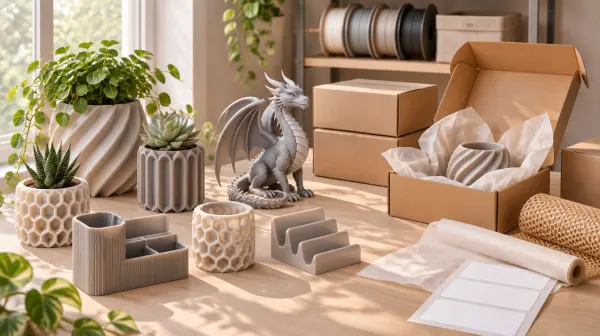
- Show the item in use: a phone stand holding a phone, a planter with a real plant.
- Shoot lamps and lithophanes lit up in a dark room.
- For moving prints like dragons and fidgets, add a 5-second video of the motion.
- Show scale with a hand or a known object, and list sizes in inches.
- Use daylight and a clean background.
Step 7: Launch before the season
Seasonal products sell when buyers are looking, so list early. Christmas ornaments should be listed by early November. Right now, most of MakerWorld's trending feed is Christmas decor. See Christmas 3D prints to sell and 3D printed gifts. Craft fairs and school events are also good places to test small products like flexi animals before you list them online.
Step 8: Scale your 3D printing business with a print farm
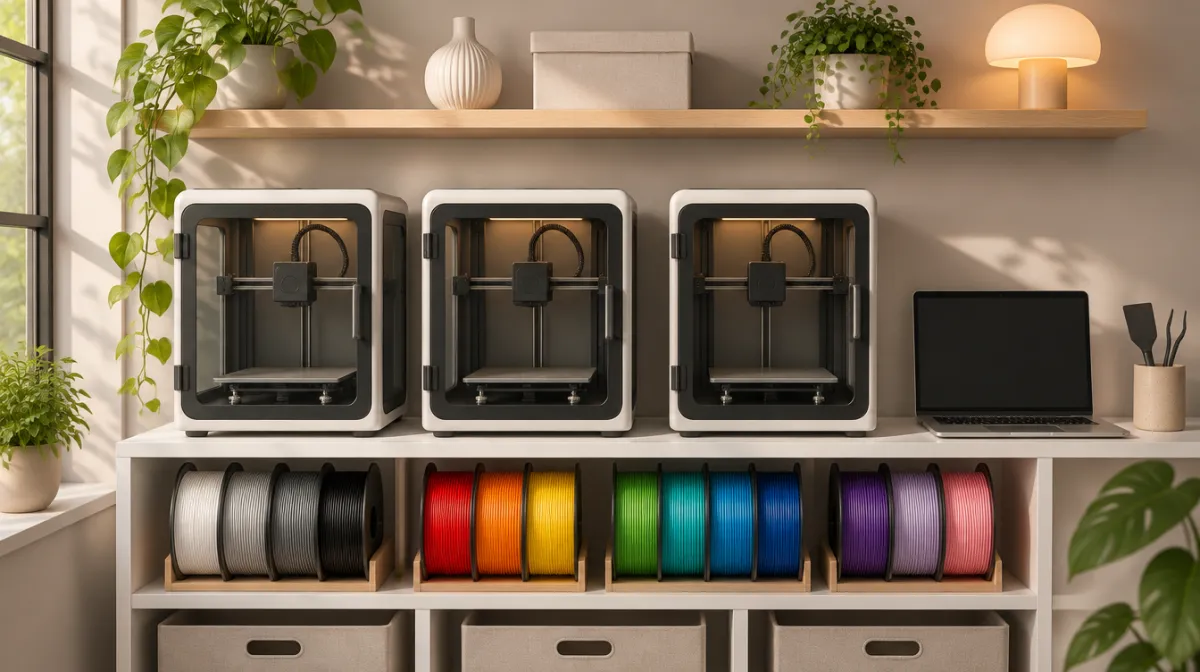
Once one product sells steadily, add printers that run the same jobs. Bambu Lab printers are the default choice for many print farms because they are fast and mostly automatic, and many small farms run rows of Prusa printers for reliability. Compare models on our Bambu Lab, Prusa and Creality pages.
Other ways to grow without more machines:
- Sell packs, not singles. NextLevel3Duk sells keychains as school-bag and party-bag packs.
- Package small prints into a bigger product, like Crafts3Dcom's advent calendar with 24 mini toys.
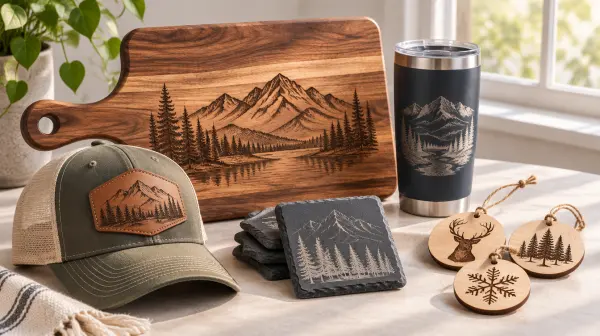
- Add a second channel, such as laser engraving. See laser engraving ideas to sell.
For more real examples, browse our stories page. For first projects on an entry printer, see Bambu Lab A1 projects.
FAQ
Is a 3D printing business profitable?
It can be, if you price from real costs and pick a product people pay for. Shops like NextLevel3Duk (35,697 sales) and PrintLevel3D (21,324 sales) show steady demand. Run your numbers in a pricing calculator before you list.
Do I need a license to sell 3D prints?
You need the right to sell each design. Many models are personal use only. Buy a commercial license from the designer, use designs with a license that allows selling, or make your own.
What are Etsy's fees for 3D printing sellers?
In the US: $0.20 per listing, a 6.5% transaction fee, and payment processing of about 3% + $0.25. Check Etsy's fee page for current rates.
What should I sell first?
Start with one niche product that is quick to print and easy to personalize, such as name keychains, phone stands or lithophanes. Add more products once the first one sells steadily.
Data sources: MakerWorld public model pages, Etsy search results (US) and public shop pages, Google Trends and Ahrefs, checked 2026-11-16. Images are AI illustrations.